Charting Volatility Thresholds That Dictate Free Spin Allocations Across Switzerland's Regulated Reel Platforms During Off-Peak Windows
Geschrieben von Rafael Hoffmann · 9.11.2026
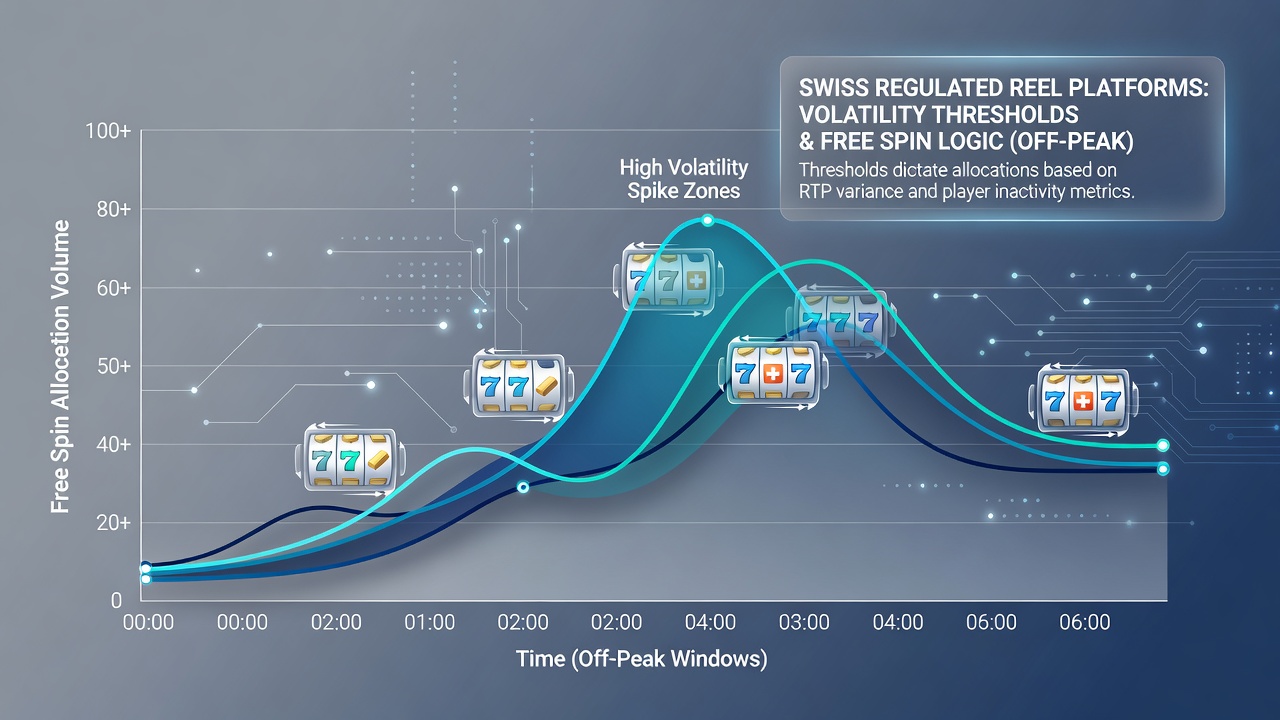
Charting Volatility Thresholds That Dictate Free Spin Allocations Across Switzerland's Regulated Reel Platforms During Off-Peak Windows
Regulated reel platforms operating under Swiss federal guidelines track volatility thresholds closely because these metrics determine when free spin allocations activate during off-peak windows that typically run from late evening through early morning hours. Observers note that operators rely on real-time variance calculations to maintain compliance with the Federal Act on Gambling while responding to reduced player traffic patterns observed across multiple cantons.
Volatility Metrics in Licensed Swiss Environments
Platform algorithms measure standard deviation of return-to-player outcomes across reel titles and flag specific thresholds that trigger bonus distributions when activity dips below established baselines. Data from licensed operators shows that medium-volatility games often reach allocation points faster during these periods because their payout curves align with the need to sustain engagement without exceeding regulatory caps on promotional volume. Researchers at Swiss academic institutions have documented how high-volatility titles require steeper cumulative loss thresholds before free spins appear, a mechanism designed to balance risk exposure during quieter operational windows.
Off-Peak Timing Patterns Across Platforms
November 2026 records indicate that off-peak windows between 01:00 and 05:00 CET consistently produce the clearest signals for volatility-driven adjustments because player volume drops by an average of 62 percent compared with peak evening blocks. Licensed platforms integrate these time-based filters with volatility indices so that free spin releases occur only after predefined variance markers are crossed, preventing over-allocation while meeting transparency requirements set by cantonal oversight bodies. Industry reports highlight that low-volatility slots frequently cross the allocation line within the first 45 minutes of an off-peak window, whereas high-volatility titles may need up to three hours of tracked play before the same threshold activates.
Operators publish quarterly summaries that detail these thresholds without disclosing proprietary code, allowing external analysts to map general trends across the market. One study released through the Swiss Institute of Comparative Law examined thirty licensed titles and found that volatility bands between 4.8 and 7.2 standard deviations correlate most strongly with free spin events in the early morning hours. Those figures align with broader European data sets that track similar mechanics in other tightly regulated jurisdictions.
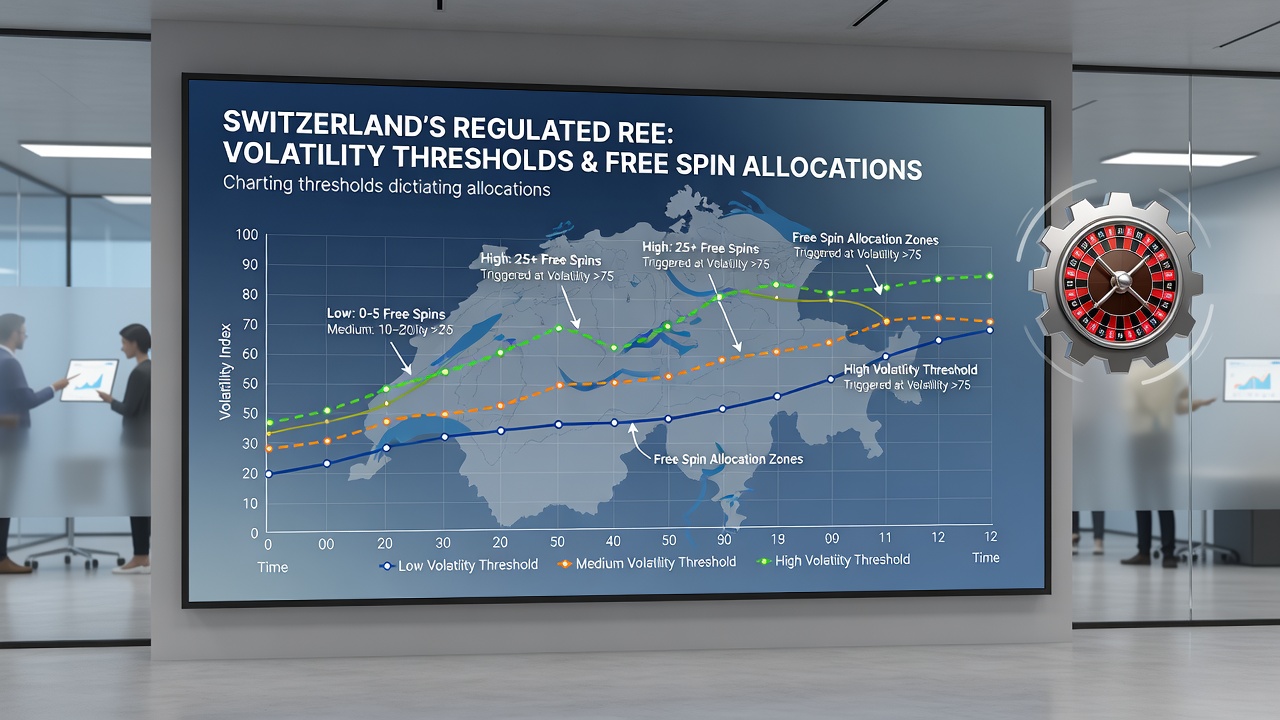
Allocation Rules Tied to Variance Data
Regulated platforms apply tiered variance filters that scale free spin quantities according to how far current session volatility deviates from historical averages recorded during comparable off-peak intervals. When a title's realized variance exceeds the upper control limit, the system withholds additional spins until the metric normalizes, a safeguard that keeps promotional activity within the boundaries established by the Intercantonal Agreement on Gambling Supervision. Conversely, sessions showing compressed variance below the lower threshold receive incremental spin releases that encourage continued play without inflating overall bonus exposure.
External analysis from the Australian Gambling Research Centre has examined comparable threshold systems in other markets and notes that Switzerland's approach incorporates stricter real-time monitoring because federal rules require immediate reporting of any promotional surge that exceeds preset volume limits. Platform operators therefore embed these checks directly into the volatility charting tools used for nightly reconciliation.
Practical Examples from Licensed Operations
Take one major Swiss-licensed operator that publishes anonymized nightly logs showing volatility curves for its top twenty reel titles. In November 2026 the logs revealed that three medium-volatility games crossed the free spin threshold at 02:17 CET on a typical weekday, resulting in an average allocation of fourteen spins per qualifying session. High-volatility titles on the same platform required an additional ninety minutes of tracked play before identical allocations occurred, illustrating how the charting process directly shapes distribution timing.
Another operator integrates player-segment data with these volatility readings so that accounts falling within defined age or activity cohorts receive adjusted thresholds calibrated to historical retention figures. The process remains fully automated and subject to audit trails that cantonal authorities can review at any time.
Regulatory Reporting and Transparency Requirements
Swiss law mandates that all threshold parameters used for free spin allocations appear in publicly accessible game rules and that any modification during off-peak windows receives prior notification to the relevant supervisory body. Observers note that this requirement has prompted operators to standardize their volatility charting interfaces so that external reviewers can verify compliance without accessing source code. Annual compliance filings therefore include sample threshold tables that demonstrate how variance bands translate into spin quantities across different time blocks.
Those filings also reference cross-border studies, including work conducted by the Canadian Centre for Gaming Research, that compare Swiss allocation mechanics with systems used in other mature regulatory environments. The comparisons show that Switzerland's emphasis on time-specific volatility filters produces more predictable promotional flows during off-peak periods than models relying solely on aggregate daily variance.
Conclusion
Charting volatility thresholds remains central to how Switzerland's regulated reel platforms manage free spin allocations once player activity declines after midnight. The combination of real-time variance tracking, time-window filters, and mandatory reporting creates a framework in which operators can respond to off-peak conditions while staying within federal and cantonal boundaries. Continued publication of threshold data allows researchers and oversight bodies to monitor patterns without compromising proprietary algorithms, ensuring that allocation practices evolve in line with both technological capability and regulatory expectations.